Results
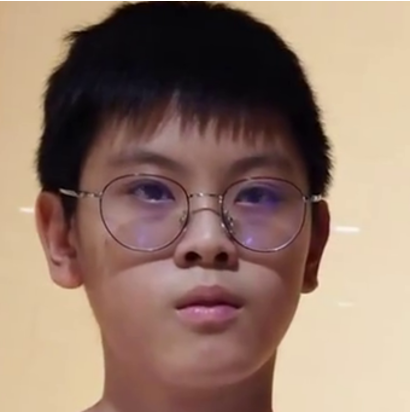
Reference
Target
Ours
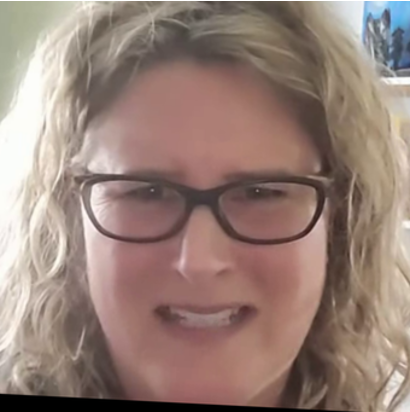
Reference
Target
Ours

Reference
Target
Ours
The rise of e-commerce and short-video platforms has fueled demand for realistic video-based virtual try-on. Unlike virtual try-on of clothing, which has been actively studied to date, virtual try-on of eyeglasses is uniquely challenging: they align closely with facial structure and strongly affect facial identity, making the faithful preservation of unedited regions especially important. Existing generative editing approaches, such as GAN- and diffusion-based methods, lack reconstruction objectives and often rely on inpainting, which fails to ensure identity consistency. We argue that semantic editing requires not only plausible generation but also faithful reconstruction, making autoencoder-based latent spaces a natural fit. We introduce a training-free, reference-guided framework for video eyeglass transfer built on Diffusion Autoencoders (DiffAE). By blending semantic features in the encoder and incorporating spatial-temporal self-attention, our method achieves realistic, identity-preserving, and temporally consistent results, and points to the potential of autoencoder-based latent spaces for local video editing.
Reference
Target
Ours
Reference
Target
Ours
Reference
Target
Ours

@article{chan2026freeeyeglass,
  title={FreeEyeglass: Training-free and Target-mask-free Eyeglass Transfer for Facial Videos},
  author={Chan, Weng Ian and Huang, Yuantian and Yang, Xingchao and Okura, Fumio and Taketomi, Takafumi},
  journal={Transactions on Machine Learning Research},
  year={2026},
  url={https://openreview.net/forum?id=6aFRoQcm3H}
}